MICE business is one of the most valuable segments in hospitality. Unlike leisure travelers, these potential guests arrive with a clear purpose such as organizing a corporate event, coordinating a multi-day conference, or celebrating a special occasion.
NB: This is an article from The Hotels Network, one of our Expert Partners
Subscribe to our weekly newsletter and stay up to date
This demand is not seasonal. It is constant, strategic, and drives higher booking values, longer stays, and significant ancillary revenue throughout the year. Yet despite its potential, many hotels still struggle to convert MICE traffic through their direct channels.
The reason is simple: most hotel websites are designed for traditional travelers, not for meeting planners or event organizers. These users follow a different journey: they research extensively, compare venues, and often leave without submitting an inquiry. Generic website experiences often fall short when it comes to capturing high value MICE demand. To truly engage this segment, hotels need to adapt their messaging to user intent in real time. That’s where a strong personalization strategy makes all the difference for identifying MICE intent, guiding decision-making, turning anonymous traffic into qualified leads, and ultimately into direct revenue.
Let’s explore how your hotel website can become a powerful driver of MICE performance.
1. Recognize and Engage Meeting Planners Early
Identifying specific behavioral signals such as visits to Meetings & Events pages, referrals from MICE platforms or repeated engagement with event-related content can all indicate meeting planner traffic. By recognizing these signals early, hotels can adapt their website experience in real time.
When planners land on the Meetings & Events page of the Saltic Resort & SPA Łeba, a timely Layer presents a clear conference package with pricing, inclusions and a direct contact CTA, transforming an initial visit into a meaningful interaction and positioning the hotel as a strong candidate before planners move on to compare other venues.
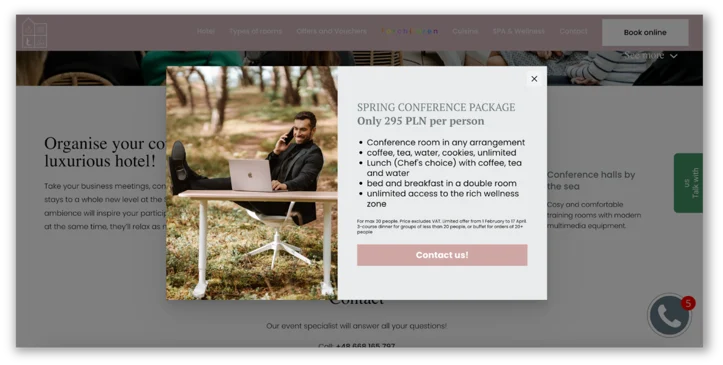
A personalized Layer on the Meetings & Events page
2. Open the Door to Inquiries Before They Knock
Planning an event is a process that involves high consideration. By the time a planner is ready to reach out, every extra step is a reason to move on to the next venue on their list.
Read the full article at The Hotels Network