
There’s a tendency in the hotel business to default to higher volume when things aren’t going well. Need more revenue? Drop rate. Push promotions. Open the floodgates on every channel and hope it fills in. It works – sometimes. Other times, it just creates more problems. Attracting the wrong type of guests. Increasing costs from labor and guest supplies, and typically reducing profits.
NB: This is an article from TCRM, one of our Expert Partners
Subscribe to our weekly newsletter and stay up to date
When presented with a similar challenge for a boutique hotel, we took a different, almost opposite, approach.
The Situation Most Hotels Recognize
Going into the year, the property had a familiar set of challenges:
- Heavy reliance on OTAs
- Discounting had become the norm, not the exception
- International promotions were driving volume, but not much else
- The direct channel existed, but it wasn’t doing as much heavy lifting as we wanted
None of this is unusual. In fact, it’s how a lot of hotels end up operating over time – small decisions stacking up until pricing power quietly disappears.
Step One: Fix the Pricing (Before Anything Else)
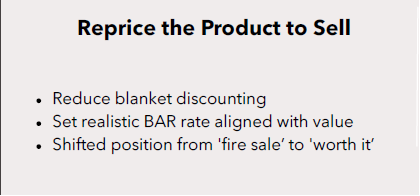
The biggest shift here wasn’t a new channel or a new campaign. It was pricing discipline.
Discounting wasn’t eliminated, but it was no longer the starting point. Rates were reset to reflect the product’s value, and, more importantly, they remained consistent.
That repositioned the hotel. Not overnight, but enough to move it away from the “deal-driven” category and back toward something closer to “worth paying for.”
And that matters, because everything else – marketing, distribution, conversion – works better when the price makes sense.
Step Two: Make Direct Actually Compete
A lot of hotels say they want more direct bookings, but don’t really give the channel what it needs to compete. Here, that changed.
We activated the hotel’s official site on Google Hotel Ads and introduced a straightforward “Book Direct and Save” offer. Nothing overly complex – just a clear reason to book direct, paired with better visibility at the moment of search.
Not surprisingly, it worked.
Direct bookings increased by 50%, and the mix started to shift in a meaningful way.