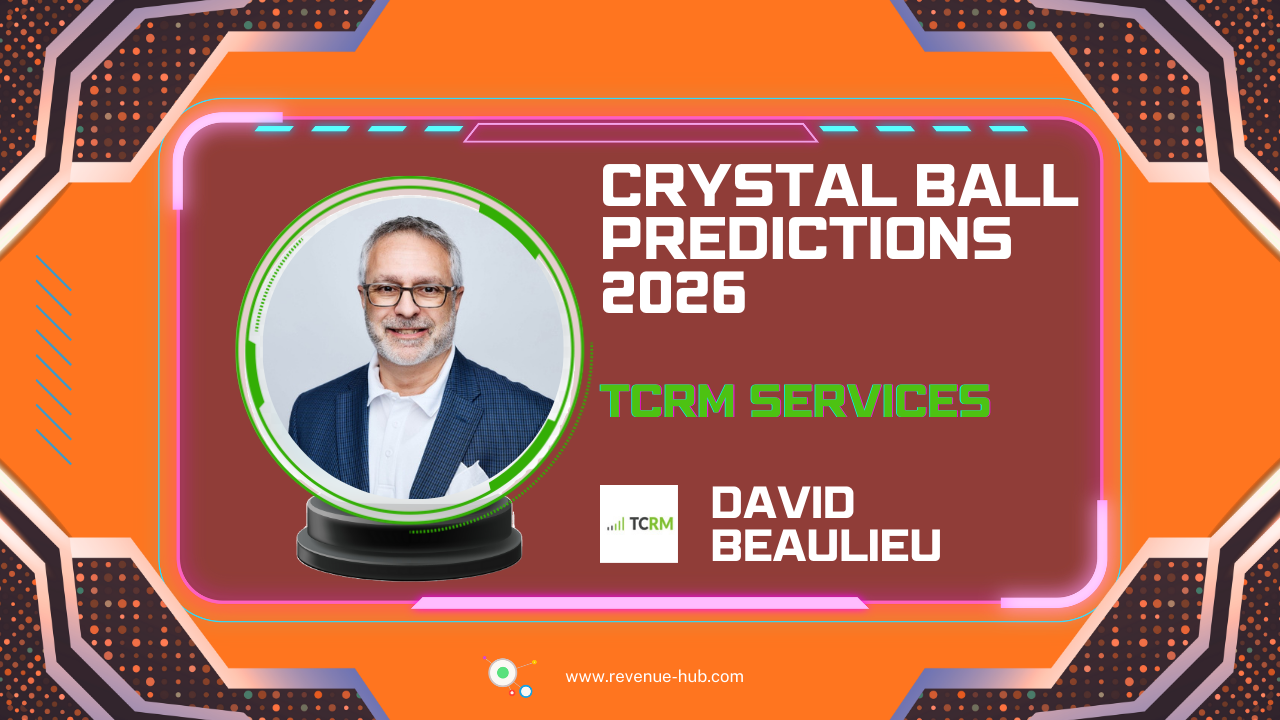
As the hospitality industry looks ahead to 2026, uncertainty remains a constant – but so do opportunity and innovation. In a recent discussion with David Beaulieu of TCRM Services, one of our Expert Partners, for our 2026 “crystal ball” predictions series, three themes emerged that hotel general managers and commercial managers should be actively planning for: the accelerating role of artificial intelligence, shifting patterns in inbound travel, and the ongoing challenge of labour costs and availability. Together, these forces will materially shape hotel performance over the next year and beyond.
Here is the full interview and we have summarised some of the key points below.
Subscribe to our weekly newsletter and stay up to date
1. AI Will Become Inescapable – and More Visible
Artificial intelligence is no longer a future concept in hospitality; it is already embedded across nearly every core hotel system. Revenue management platforms have relied on machine learning for years, and sales, marketing, labour management, and forecasting tools continue to deepen their AI-driven capabilities. Even hoteliers who believe they are “not using AI” almost certainly are – through the technology stack they depend on daily.
Looking into 2026, the key shift will be visibility. AI will move from being quietly embedded behind the scenes to becoming more recognisable to operators and guests alike. Search behaviour is already changing, with AI-generated answers increasingly appearing before traditional listings. On-property systems will continue to automate tasks such as room assignment, key creation, forecasting, and reporting. The net effect should be improved efficiency and decision-making – but it also raises important questions about workforce planning and future hiring models.
2. Immigration Policy and Travel Friction Will Influence Demand
The second major prediction centres on inbound travel, particularly to the United States. Immigration policies, visa accessibility, and broader political sentiment have already contributed to softer international demand in certain markets. While this is not uniform globally, friction around entry requirements can influence destination choice, especially for discretionary travel.
That said, 2026 is not without demand catalysts. The FIFA World Cup, hosted across the US, Canada, and Mexico, will drive meaningful inbound travel to key gateway cities. Performance of specific teams and fan mobility will determine which markets benefit most, but hotels in host cities should expect compression, rate opportunity, and atypical demand patterns. Meanwhile, destinations such as the Caribbean continue to demonstrate strong international appeal, reinforcing the importance of diversified source markets.
For revenue leaders, this means scenario planning is essential: understanding where demand may soften, where it may surge, and how external policy decisions could influence booking windows and traveller confidence.
3. Labour Costs Will Keep Rising – Driving Automation and Flexibility
Labour remains one of the industry’s most persistent challenges. Costs have risen sharply since the pandemic, and shortages continue to affect operations globally. This pressure will not ease in 2026. Instead, hotels will increasingly respond through automation, smarter scheduling, and more flexible staffing models.
One clear trend is the rise of multi-skilled teams. Rather than narrowly defined roles, hotels are training employees to operate across departments – front office staff supporting food and beverage during peak periods, or team members assisting multiple operational functions as demand shifts. Automation will complement this approach, handling repetitive or administrative tasks and allowing staff to focus on guest-facing activities.
While specialists will always be critical – chefs, technical experts, senior leaders – the broader workforce is likely to become more versatile. For general managers, this creates an opportunity to redesign roles that are more engaging, resilient, and attractive to talent.
Looking Ahead
Taken together, these three predictions point to a hospitality industry that is becoming more technology-driven, more operationally flexible, and more sensitive to global policy dynamics. Hotels that invest early in AI adoption, proactively monitor demand drivers, and rethink labour strategies will be best positioned to navigate 2026 successfully – and to turn uncertainty into competitive advantage.