
For hotel chains and groups, the Spring seasonal surge is not just a revenue opportunity. It’s a testing ground. With multiple properties, you have the ability to experiment and optimize with different campaign mechanics, measure what resonates by market and quickly scale what works.
NB: This is an article from Lighthouse
Subscribe to our weekly newsletter and stay up to date
But to capture demand at its peak, your direct channel strategy needs to be as intentional as your OTA presence.
Here are five proven approaches to help hoteliers increase direct bookings this spring.
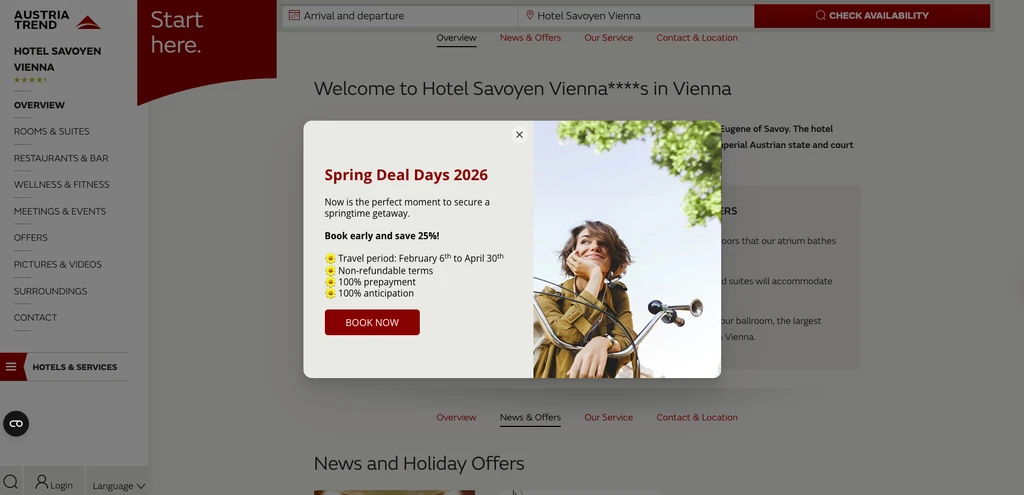
Create an unmissable seasonal moment on your website
First impressions move fast. A traveler who lands on your homepage during peak spring shopping is making a split-second decision about whether to keep browsing or bounce. A bold, time-bound seasonal offer displayed prominently on arrival gives them a clear reason to stay.
The most effective executions of the booking process are simple: a well-defined travel window, a single compelling incentive and a direct path to the booking engine. Countdown elements and defined offer windows also tap into natural urgency without feeling manipulative.
For hoteliers, this is a strong opportunity to maintain brand consistency across properties while allowing each location to customize the specific offer for their market – whether that’s a spring rate discount, complimentary breakfast or an early check-in perk.
Use interactive elements to deepen website engagement
Spring holidays – Easter in particular – give hotel marketers a natural hook for experiential campaigns. Rather than presenting a straightforward discount, consider building a layer of discovery to enhance the guest experience.
Interactive mechanics like a gamified offer reveal, where potential guests explore multiple pages before unlocking a deal, dramatically increase time on site, pages visited and brand familiarity. These are all signals that correlate with higher conversion.
Chains benefit here from the ability to coordinate interactive campaigns across a portfolio simultaneously, creating a cohesive but locally adapted brand moment at scale.