Historically, we’ve seen the same key elements in the Search Engine Results Page (SERP): ads placed at the top, a map or local listings beneath, and organic results taking up the rest of the page. A knowledge graph or Google Business Profile (GBP) for branded searches is on the right and pagination on the bottom.
NB: This is an article from Vizergy
Subscribe to our weekly newsletter and stay up to date
Now you’ll find a richer, more complex landscape with significantly less space for traditional organic results. We’re seeing more map packs, carousel ads, “People Also Ask” sections, and crucially, new “More hotels” sections featuring additional metasearch ads. Organic listings are often pushed further down the page, often below the fold, requiring users to scroll extensively.
Take this search for hotels near a landmark in San Antonio, for example:
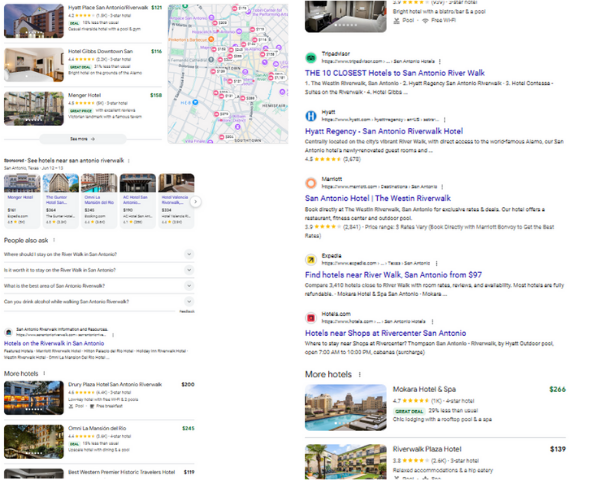
We’re only seeing a handful of organic search results, which is a substantial reduction in the number of organic results we’ve been shown in the past. Google has also removed the pagination and changed the experience to a continuous scroll in many searches.
But this isn’t anything new – Google changes this landscape frequently aiming to deliver a rich set of search results. Therefore, we must focus efforts on ways to get visibility within these facets of the landscape since ads and features dominate SERPs far more than organic results.
What is Google’s AI Overview?
The most prominent new player in Google search is the AI Overview. Depending on the query, this AI-generated summary can appear at the top of the SERPs for a significant percentage of searches. The AI Overview is comprised of a variety of sources including hotel and attraction websites as well as online publications and other travel-related or relevant websites. The existence of the AI overview has already shown to lead to a reduction in website clicks since its intelligent and well-developed answers tend to answer the query right in the results instead of requiring further action. However, we don’t anticipate to see a huge shift in click-through-rate for lower funnel travel searches since the user would still need to take some action to complete a purchase.
From Keywords to Conversations: Shifting Search Behavior
The rise of AI in search means a fundamental shift in how users search and, consequently, how we should optimize. While traditional keyword research still has its place, the emphasis is now on understanding and answering conversational, intent-based queries. People are asking longer, more detailed questions, expecting AI to provide highly relevant, comprehensive answers. They can also ask follow-up questions to refine their answers.