

The hotel market in Portugal continues to break records year after year, but the data reveals a more nuanced reality, a RevPAR of €72.38, growth of +4.3% compared to 2024, and tourism revenues exceeding €27 billion, at first glance paint an optimistic picture for the Portuguese hotel market, however, a closer look at the figures reveals a more complex context.
NB: This is an article from BEONx, one of our Expert Partners
Subscribe to our weekly newsletter and stay up to date
The first sign of change is in the trend, in 2025, RevPAR in Portugal increased by +4.3% compared to the previous year, while ADR grew by +4.0%, these are positive figures, but they show a slowdown compared to the strong post-pandemic momentum, we are not talking about a crisis, as results remain solid, but a market that is beginning to show signs of greater resistance and demands more strategic and precise management.
The natural question is: Why is growth slowing? To answer this, it is necessary to analyze RevPAR and ADR separately.
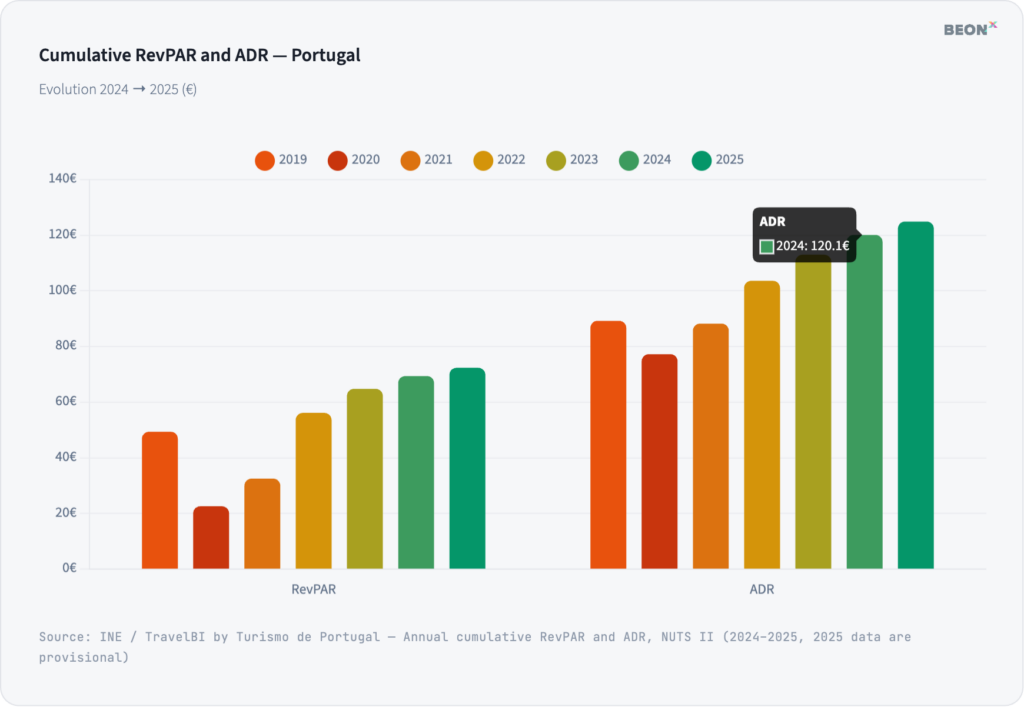
Growth is coming from price, not from occupancy.
The answer is clear, over the past year, occupancy has barely changed, from 57.8% to 57.9%, this means that almost all of the RevPAR growth is explained exclusively by rate increases, hotels are selling the same number of rooms as before, they are simply charging more for them.
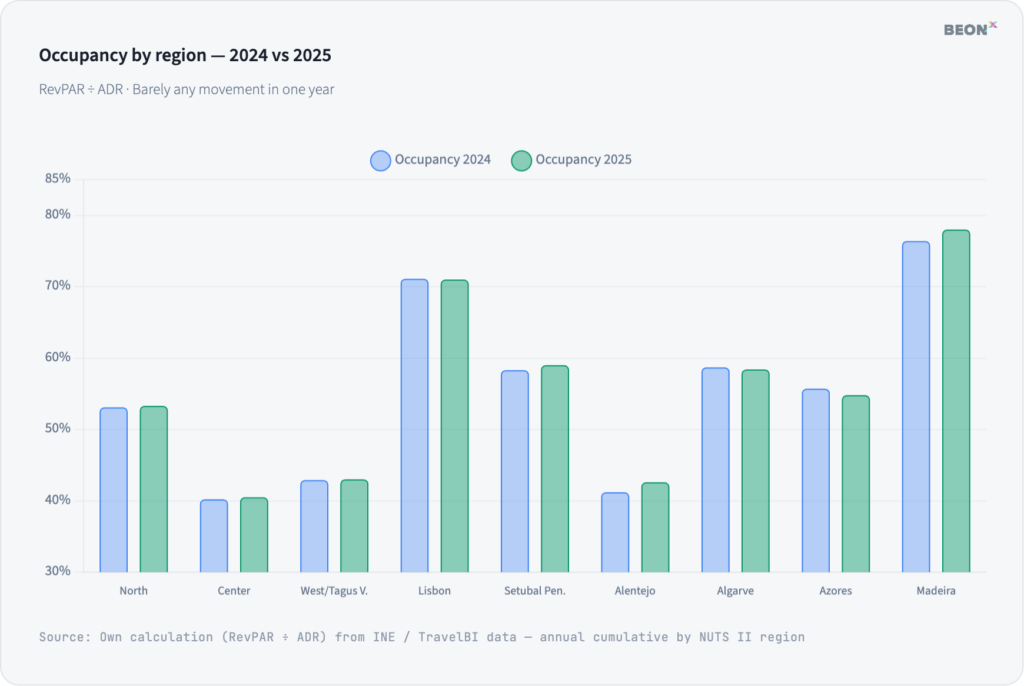
It’s a model that works, until it doesn’t, and the data shows that in one particular region, this strategy is no longer effective.
Lisbon is the mirror in which the rest of the regions will see themselves in a few years, and the proof that future growth will not come from blindly raising prices, but from managing when, to whom, and at what rate each room is sold.
When occupancy reaches its peak, the only remaining room for growth is to optimize rates on the days of highest demand.
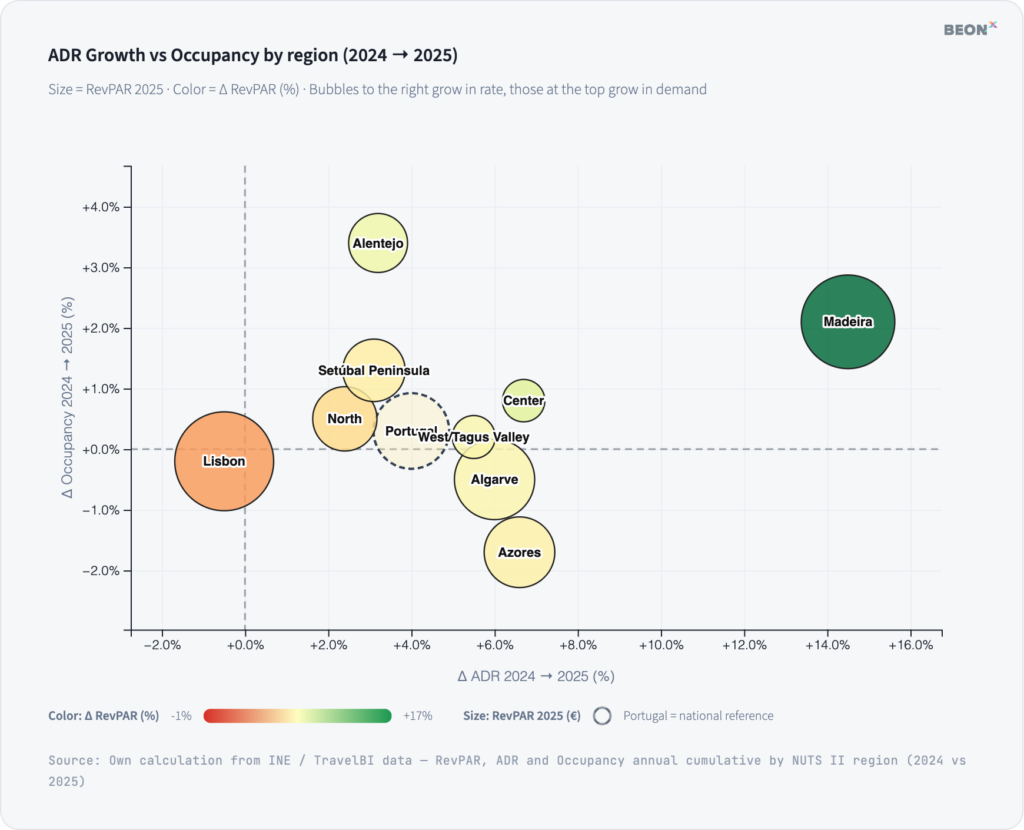
Nine markets, nine speeds
Talking about Portugal as a single market is a mistake, if the regional data reveals anything, it is that the national average represents no one, the RevPAR growth ranking between 2024 and 2025 defies all expectations, the fastest-growing destinations are not Lisbon or the North, but precisely the regions that many consider “secondary.”