As the hospitality industry looks ahead to 2026, many of the challenges hoteliers have faced in recent years show no sign of disappearing. Instead, they are evolving, converging, and in some cases intensifying.
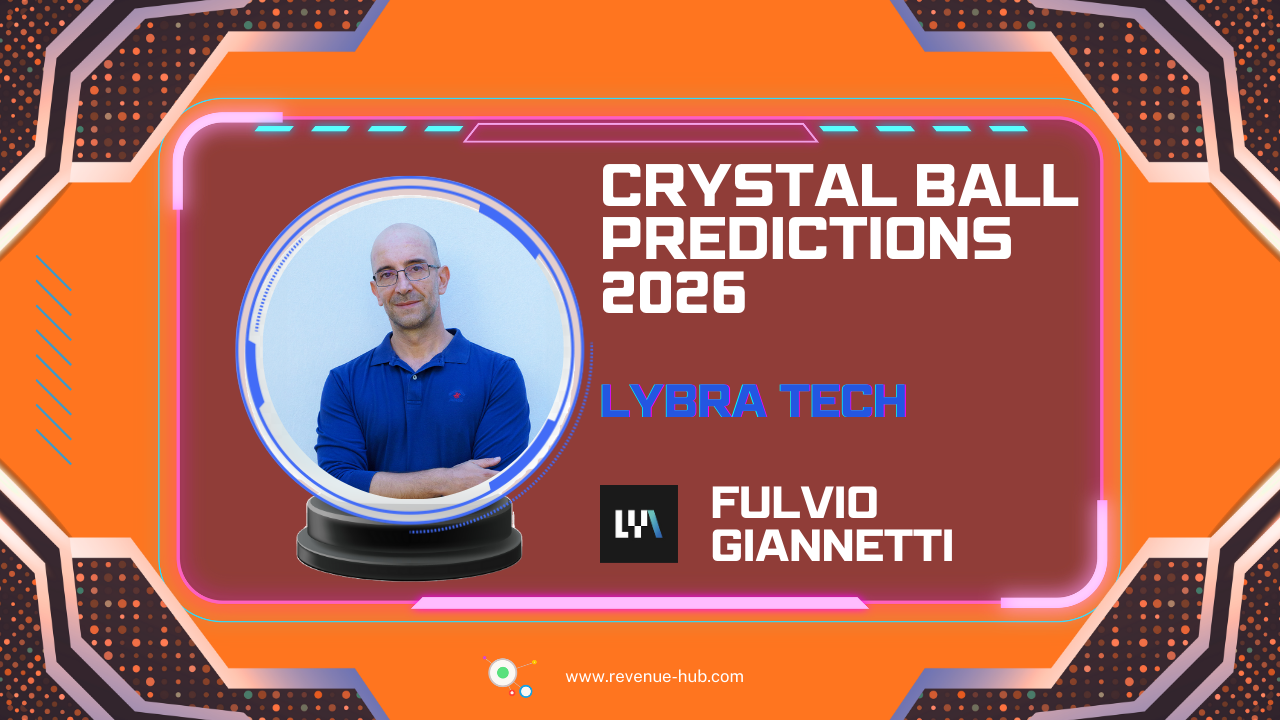
In a recent discussion as part of our 2026 “crystal ball” predictions series, Fulvio Giannetti of Lybra Tech, one of our Expert Partners highlights how labour shortages and margin compression, growing pressure of sustainability regulations and the sobering reality behind artificial intelligence, will mean hotel leaders needing to operate with greater discipline, efficiency, and strategic clarity than ever before.
Here is the full interview and we have summarised some of the key points below.
Subscribe to our weekly newsletter and stay up to date
Labour Shortages Remain a Structural Issue
One of the most persistent challenges heading into 2026 is the ongoing labour crisis. What began during the COVID period has now become a structural issue across many markets, including traditionally strong hospitality labour pools in Europe. Hotels continue to struggle to recruit and retain staff across operations, housekeeping, and food and beverage.
For hotel managers, the issue is not simply one of headcount, but service delivery. Hospitality is fundamentally people-driven. Without sufficient, well-trained staff, service quality inevitably suffers. Lower-tier and limited-service properties are often hit hardest, as they typically operate with thinner margins and less flexibility to absorb higher wage costs.
Profitability Under Pressure
While average daily rates in many markets have stabilised, cost inflation has not. Labour, energy, food, and compliance costs continue to rise, placing sustained pressure on GOP. For revenue managers, this creates a difficult balancing act: pricing power appears capped in many destinations, yet expenses continue to climb.
This reality reinforces the importance of disciplined revenue management, cost control, and productivity improvements. Profitability, rather than topline growth alone, is once again the central focus for hotel leadership teams.
AI: From Hype to Hard Reality
Artificial intelligence remains a dominant topic, but 2026 may mark a turning point in expectations. While experimentation is widespread, genuinely transformative AI implementations in hotel operations remain limited.
Many hotels are still in trial phases, testing tools in isolation rather than embedding AI into core business processes. A key challenge is the lack of internal skills required to operationalise AI at scale. Implementing AI is not the same as purchasing software; it requires governance, integration with existing systems, and ongoing human oversight.
For most hotels, AI will deliver incremental gains rather than revolutionary change in the short term. The winners will be those that focus on practical, process-driven applications rather than chasing technology for its own sake.
Sustainability: Compliance Today, Advantage Tomorrow
Environmental regulation is another area where pressure is increasing, particularly in Europe. New sustainability and carbon reporting requirements will add cost and complexity for hotel operators, especially for older properties requiring retrofitting.
In the short to medium term, these initiatives are likely to compress margins further. However, over the long term, compliant and future-proofed assets will benefit from a competitive advantage, both operationally and in guest perception. Access to funding and incentives will increasingly depend on meeting these standards, making sustainability a strategic necessity rather than a marketing exercise.
Management Over Entrepreneurship
The overarching theme for 2026 is execution. The coming year will favour disciplined management over bold experimentation. Efficiency, process optimisation, and thoughtful technology implementation will separate resilient hotels from those that struggle.
Change in hospitality is often gradual year to year, but significant when viewed over a longer horizon. Hotel leaders who focus on fundamentals today will be best positioned to navigate what promises to be another complex and demanding year ahead.