

Today’s meeting planners juggle dozens of proposals, deadlines, budgets, and stakeholder expectations. Many are managing complex sourcing processes with tight timelines and rising expectations. In fact, planners report that 80% now expect RFP responses within four days, yet many hotels still struggle to meet this benchmark, making concise, clear proposals even more critical.
NB: This is an article from Upmail
Subscribe to our weekly newsletter and stay up to date
That’s why “less is more” isn’t just a design principle – it’s a sales strategy. Planners don’t need everything about your hotel; they need the right essentials clearly presented. So how do you decide what stays and what goes? Read on to find out more.
Meeting Planners Are Busy – and They Want Clear, Fast Answers
Meeting planners consistently report that speed, accuracy, and clarity are some of the top pain points in sourcing venues. In a global planner survey, many noted that poor transparency on pricing and lack of clarity hurt a hotel’s chance of winning business.
They’re balancing multiple venues, comparing proposals side by side, and often making decisions under tight timelines. Planners want the key decision factors first – not buried in paragraphs of promotional content.
Put the Essentials Front and Center
Meeting planners tell us and industry research confirms the most important information in a proposal includes:
- Room blocks & rates
- Event dates and availability
- Meeting & event space details
- Key venue highlights (location, amenities, restaurants)
These are the elements planners use to immediately rule a venue in or out. That means your proposal should:
- Give them the essentials up front
- Use clear headings, bullet points and tables
- Avoid long narrative copy that distracts from the key facts
In fact, lengthy proposals with unnecessary details can overwhelm and even lose business. One hotel sales analysis highlights that proposals overloaded with irrelevant content risk confusing planners and hiding the information they actually need.
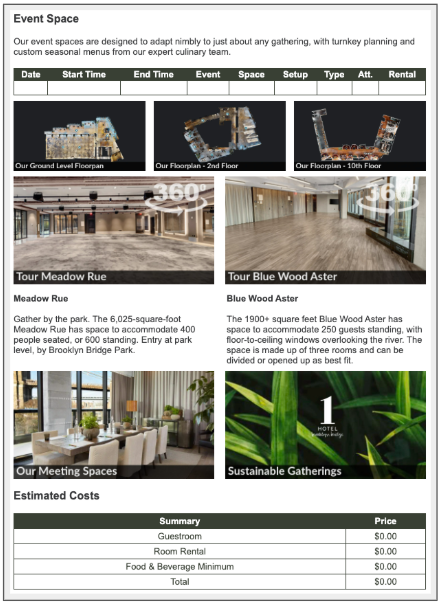
Less Clutter, More Confidence
A cluttered proposal slows decision-making. Offering streamlined information does the opposite – it helps planners feel confident and informed.
Instead of including the full catalog of your services in the main document, link out to supporting resources such as:
- Floor plans
- Catering menus
- Full website or culinary pages
- Interactive virtual tours
These linked assets keep your core proposal succinct while still giving planners access to everything they might need.