
Hotels have spent years refining the booking journey. But new data suggests the next major opportunity for hotel revenue may lie somewhere else entirely – after check-in. In research our team recently conducted, we found that roughly 35 percent of guest spending occurs after check-in.
NB: This is an article from Phunware
Subscribe to our weekly newsletter and stay up to date
For a 200-room hotel operating at around 60 percent occupancy, that can represent more than $2 million in potential ancillary revenue each year.
Yet this is often the moment when many hotels lose digital engagement with their guests.
The personalized journey that guided a guest from discovery to booking goes quiet the moment they pick up their room key. No contextual recommendations, no wayfinding to the amenity they browsed before arrival, no timely nudge when they’re steps away from an open table. Guests are on property making real-time spending decisions, and the hotel has no digital way to be part of that conversation.
It’s not a hospitality problem. It’s an infrastructure gap that creates a blind spot during the phase of the stay when on-property spending begins.
The Discovery Gap
The hospitality industry has made tremendous progress improving the pre-arrival experience. Booking journeys are personalized, pre-stay communications are automated, and upsell opportunities are presented before a guest even arrives.
But once the guest checks in, the experience often becomes far more passive.
Guests may receive printed maps, static signage or a hotel app that functions more like a digital brochure than an active engagement tool. In larger resorts, convention hotels and mixed-use properties, this often leaves guests navigating the property with limited guidance.
At the same time, many of the most profitable decisions of a stay happen during the stay itself. Guests decide whether to book spa appointments, dine on property, reserve cabanas, attend activities or extend their stay only after they arrive.
If those options are difficult to discover in the moment, they frequently go unrealized.
In many cases, missed ancillary revenue is not a demand issue. It is a visibility issue.
Guests simply do not know what is available.
A guest may walk past a lounge without realizing there is live music scheduled that evening. A family at the pool may not know cabanas are available the next day. A business traveler may skip an on-property restaurant because they assume the hotel has limited dining options.
The hotel already has the amenity and the guest is nearby – but the connection between the two never happens.
This challenge becomes even more pronounced in large properties where amenities may be spread across multiple buildings, floors or outdoor spaces.
Turning Mobile Into a Property Guide
One approach gaining adoption among operators is using mobile technology to guide guests through the property in real time.
We recently analyzed over 112,000 guest reviews across 215 U.S. resort properties. The finding was unambiguous: Public complaints about navigation and wayfinding shows up in 75 percent of the properties That means 3 out of every 4 resorts are creating a less than optimal guest experience due to a lack of navigation support. Two themes dominated:
- “This place is a maze.” Thirty percent of navigation complaints described layouts as confusing or disorienting, before guests ever made a spending decision.
- “I got lost. Needs better signage.” Thirty-four percent of complaints involved guests expressing frustration about getting lost while trying to navigate a complex property or the property not providing sufficient signage or wayfinding markers.
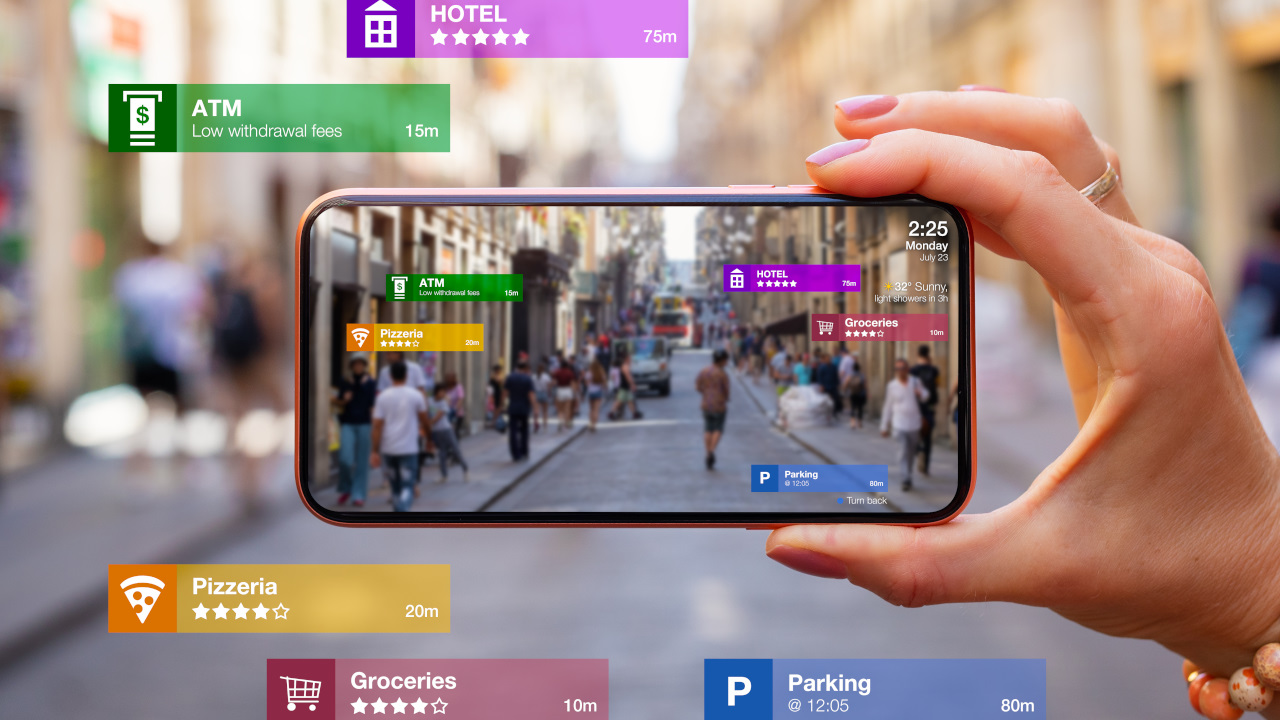
Instead of functioning as static directories, mobile apps become dynamic engagement tools. Guests can quickly find restaurants, lounges, meeting rooms, pools or wellness areas through interactive maps and self-guided navigation.
Because the platform integrates with systems such as PMS, POS and CRM platforms, hotels can also connect guests with services like dining reservations, spa bookings or event information in the moment those decisions are being made.
In effect, the guest carries a digital concierge in their pocket throughout their stay.
Why Context Matters
Many hotels have experimented with push notifications over the years, but generic messaging rarely produces meaningful engagement. Guests quickly tune out messages that feel untargeted, promotional, or irrelevant to where they are.
A happy hour message becomes far more relevant when a guest is already near the bar. A spa promotion becomes more compelling when it appears while someone is near wellness amenities. A dining recommendation performs better when it arrives at the moment a guest is deciding where to eat.
When digital engagement is tied to location and timing, it begins to feel less like marketing and more like personalized service.
The Operational Case Compounds the Revenue Case
Ancillary revenue gets the headlines, but operators often find a second return hiding in the data.
When guests navigate independently, front desk volume drops. Staff answering fewer directional questions means more time on higher-value interactions, and measurably lower service bottlenecks during peak periods.
More importantly, every guest interaction with a mobile platform generates behavioral data hotels currently don’t have. Which amenities are guests searching for but not finding? Where do they spend time? Which promotions actually change behavior? That data doesn’t just improve marketing, it informs staffing decisions, amenity investment, and long-term property strategy.
Most hotels are making those decisions today based on intuition. The platform turns intuition into evidence.
The Next Phase of Guest Engagement
The hospitality industry has already done an impressive job optimizing the booking funnel.
The next opportunity lies in unlocking the value of the guest journey once the guest has arrived.
For hotel operators, a few questions can quickly reveal where opportunity exists:
- Where do guests most frequently ask for directions?
- Which amenities consistently underperform relative to their potential?
- How visible are on-property experiences during the guest stay?
- How much staff time is spent answering repeat questions?
If you can’t answer those questions today, that’s the gap. The guest journey does not end when someone checks in. In many ways, that is when the most valuable part of the experience, and the revenue opportunity, begins.