

Understanding total revenue goes far beyond monitoring room bookings. Hotels, resorts, and serviced apartments are increasingly recognising the importance of capturing every revenue opportunity across outlets, services, and guest interactions.
NB: This is an article from Juyo Analytics, one of our Expert Partners
Subscribe to our weekly newsletter and stay up to date
But how do you actually track, analyse, and optimise that revenue?
This article outlines seven effective ways to gain a comprehensive understanding of your property’s total revenue performance, so you can understand where, how, and why revenue is generated.
Whether you’re in commercial, F&B, or a general manager, these methods will help you make smarter decisions across departments and uncover hidden opportunities.
1. Customer‑centric view
Start by shifting your lens. Instead of just measuring revenue per room, zoom out and analyze total revenue per guest. Consider:
- Guest segments (business, leisure, group, etc.)
- Distribution channels (direct, OTA, travel agents)
- Source markets (local vs. international)
Total revenue performance across different booking channels | Juyo Analytics
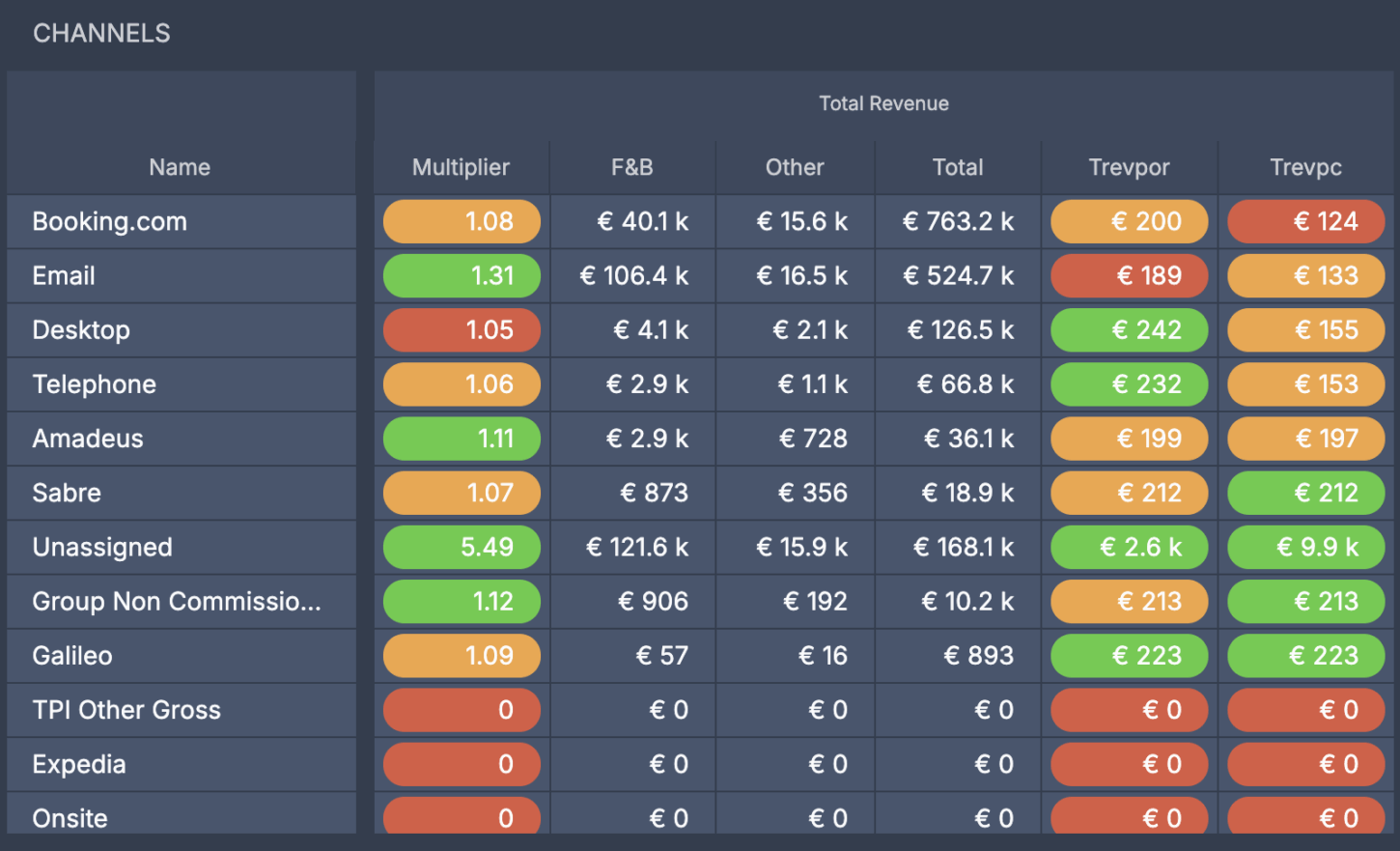
Why this matters:
Different guest profiles have unique spending patterns. This helps you understand which customer cohorts bring the most total revenue and profit, not just high occupancy. You can then adjust your marketing, pricing, and experience strategies to focus on attracting and retaining these high-value segments.
For example, you may find that direct domestic bookings generate slightly less room revenue than OTAs, but significantly higher F&B and spa spend. Prioritising these guests in your campaigns could increase overall profit without needing to fill more rooms.
Two key metrics to track here are:
- TRevPOR (total revenue per occupied room), which measures all revenue (rooms, F&B, spa, etc.) divided by the number of occupied rooms
- TRevPEC (total revenue per engaged customer), which goes a step further by calculating revenue per individual guest, not just per room. This is particularly useful when multiple guests share a booking or when you want deeper insight into per-person spend.
2. Guest spending analysis
Not all guests spend equally across your hotel(s). Once they are on your property, analyse their behavioural patterns and spending habits across various outlets:
- Who is using the spa, room service, or minibar?
- Do premium room guests spend more on-site than standard room guests?
- What time of day or stay phase (arrival, mid-stay, pre-checkout) sees the highest spend?