
The advent of Agentic AI is not just another technology trend; it is a seismic event forcing an API-first distribution mandate in the travel and hospitality industry.
NB: This is an article from TRAVHOTECH
Subscribe to our weekly newsletter and stay up to date
Based on decades of experience in the vendor and operator ecosystem, I believe the commercial winners in this new era will be those who move swiftly to build an AI-native architecture. The time for static distribution is over; the future rewards speed, data completeness, and strategic control.
The Channel Mix and Power Shift
The channel mix will change, but not through a simple overnight disruption; rather, through a strategic re-alignment of data access and transaction capability. The shift will favor channels that are “AI-native“—those capable of providing real-time, rich, and dynamic data through robust, single API calls. This is the essence of an AI-Native Distribution Strategy.
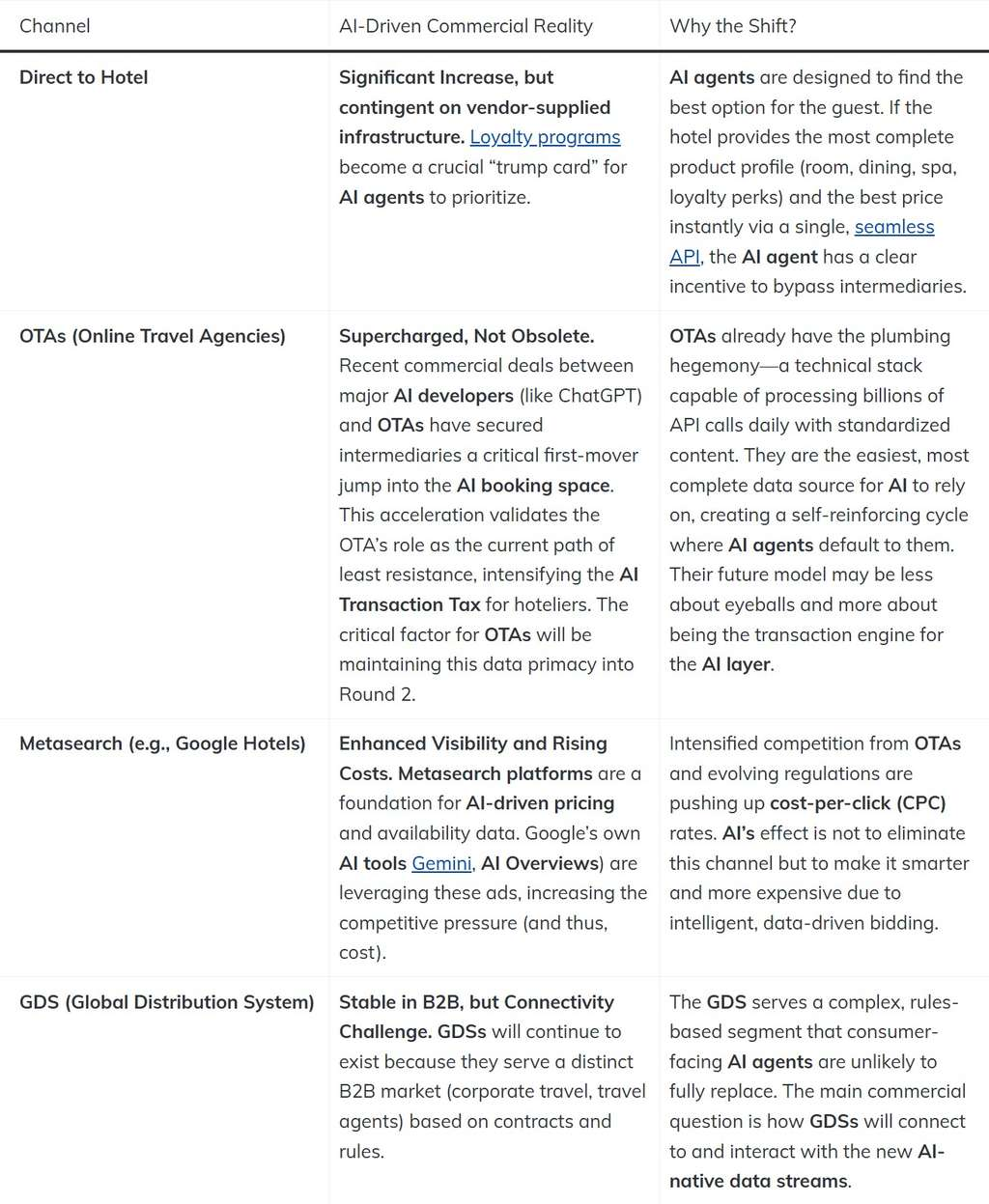
Image Source: TRAVHOTECH
The Critical Roadblocks: Data Silos and the Trust Gap
AI is Only as Smart as the Data it Eats: The Operational Roadblock
We must emphasize that AI is only as smart as the data it eats. The commercial success of the direct channel is currently being undermined by decades of fragmented operational data.
- The Fragmentation Reality: Nearly half of hoteliers 49% struggle to access the data they need, with disconnected systems cited as the main obstacle. The data sits in silos—PMS, CRS, CRM, POS—and the systems are often trapped by outdated APIs and integration fees. This is the challenge of solving hotel data silos.
- Vertical vs. Horizontal AI: The transformative shift we are forecasting requires Vertical Use Cases specific to distribution (AI for personalized booking, dynamic pricing) which unlock genuine revenue. These are stuck because the required foundation is fractured. Current Horizontal AI (chatbots, Q&A) only delivers “diffuse, hard-to-measure gains”.
- The Strategic Mandate: The “AI-first hoteliers” understand that investing in a unified data management system and clean data governance is the foundational step that must precede any visible AI feature.
The Psychological Hurdle: Trust and Delegation
The single greatest bottleneck to the commercial forecast – especially the shift to direct/Agentic AI booking – is not technology, but human psychology.
- The Trust Gap: Only 6% of global consumers fully trust AI outputs. While travelers trust AI for research and discovery (which surpasses social media and OTAs), the willingness to grant AI full autonomy to book is significantly lower.
- The Commercial Imperative: To close this gap, the distribution channel must offer Transparency, Explainability, and a Human-in-the-Loop option. Over-automating touchpoints risks degrading the essential trust and loyalty that defines hospitality.