

A good idea is not enough.
Most revenue strategies fail not because the logic is flawed, but because people don’t adopt the change. If you’re rolling out a new pricing model, reducing OTA reliance, upgrading your tech stack or shifting sales strategy, you’re not just changing systems. You’re asking teams to change habits, priorities and behaviours. That’s the hard part.
NB: This is an article from Catala Consulting
Subscribe to our weekly newsletter and stay up to date
Change management is not a soft skill. It is a critical capability for any revenue leader looking to drive real results.
In this article, we’ll show you how to manage change in hotels using two proven frameworks:
- Kotter’s 8-Step Change Model for strategic project delivery
- The ADKAR Model for individual behaviour change
Each step is tied to common scenarios in hotel revenue management.
Why Change Management Matters in Hotel Revenue Strategy
Hotels are under growing pressure to evolve. The commercial environment is becoming more complex:
- OTA costs are rising
- Market demand is less predictable
- Revenue responsibility now includes F&B, wellness and experiences
- Technology adoption is accelerating
- Owners expect more commercial discipline
Many independent hotels know what they should do – invest in better systems, improve direct conversion, move away from static pricing – but struggle to implement these changes effectively.
That’s where change management comes in. It’s not about motivation or communication. It’s about execution.
Framework 1: Kotter’s 8-Step Change Model
John Kotter’s framework gives you a structured roadmap for organisational change — from idea to embedded practice.
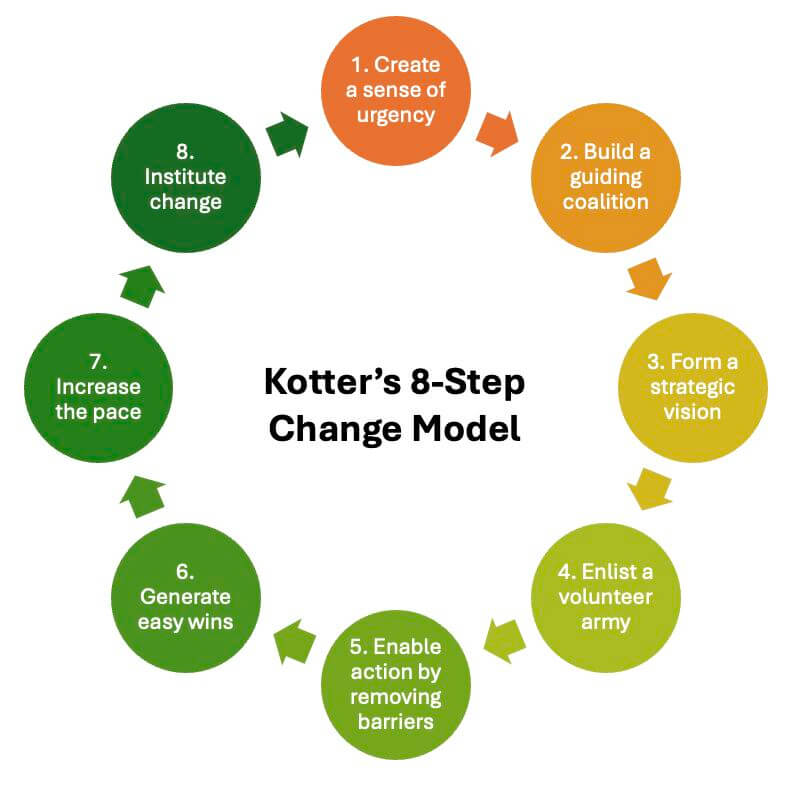
Kotter Change Management Model
Let’s break it down for hotel revenue teams:
1. Create a Sense of Urgency
Highlight why change is needed now, not later.
- Show lost revenue opportunities
- Demonstrate how your compset is gaining ground
- Share OTA cost trends or direct conversion leakage
2. Build a Guiding Coalition
Involve people across departments who will influence adoption: FOH, sales, ops, finance, marketing, GM.
3. Form a Clear Vision
Define what success looks like: e.g. “Increase direct bookings by 15% in 12 months while maintaining ADR.”
4. Enlist Volunteers
Find informal leaders on your team who are willing to pilot and promote the change.
5. Remove Barriers
Ensure SOPs, training and systems support the new way of working. Remove blockers like unclear responsibilities or conflicting incentives.
6. Create Quick Wins
Identify results you can deliver in 30–60 days and communicate them widely.
7. Sustain Acceleration
Continue to drive adoption after launch. Set new goals. Use momentum to improve related areas.
8. Make It Stick
Embed the new behaviour into job roles, training, reporting and culture. Make it part of “how we do things.”
Framework 2: The ADKAR Model (People-Centred Change)
If Kotter helps you lead the organisation, ADKAR helps you support individuals.